Chiara Andreatti for l’Opificio: Textiles as a Design Material
What does it mean to speak today of textile culture of space?
First and foremost, it means giving fabric back the role it deserves within interior design. Not treating it as the last element to be chosen once a space has already been defined, but as a material capable of taking part in its construction: through colour, texture, its relationship with light, touch, movement, and the way it accompanies the lives of those who inhabit it.
It is a reflection that lies at the heart of our work, and one that we found in MakeYourHome’s perspective on INCISA, SIGNUM and FIORA, the collections designed by Chiara Andreatti for l’Opificio.
The article explores a dimension that rarely emerges when a finished textile is presented: everything that comes before. The designer’s initial gesture, trials, intuitions, discarded attempts, the dialogue with the material and, above all, the exchange between creativity and technical expertise needed to transform a mark into a textile construction.
It is precisely through this process that a textile acquires its own design identity. A drawing is not simply transferred onto a surface: it is interpreted through yarns, structures, reliefs, densities and colour. Light does the rest, continually changing the way it is perceived within a space and throughout the day.
This is why we chose to republish the conversation between MakeYourHome and Chiara Andreatti in full, without altering it. Because it offers an external and particularly insightful perspective on what we mean when we speak of textile as a culture of space.
Textiles are once again becoming a material for design. Not a surface, not a finish, not the final decorative layer of an interior that has already been defined, but a material that actively contributes to shaping a space. And the three new collections designed by Chiara Andreatti for l'Opificio, presented at Salone del Mobile 2026, offer a perfect opportunity to reflect on this.
When I first saw them, my immediate thought was that I did not want to write about them in the traditional way. There is a part of a designer’s work that almost never makes it onto the pages of magazines: everything that happens before the finished product, the discarded trials, the accumulated marks, the dialogue with a technical team that translates a drawing into structure.
I was not interested in listing techniques, colour variations and sources of inspiration. I wanted to enter the creative process and bring to the surface a story that is almost always left out, yet is often the most interesting part of a project. So I asked to speak directly with Chiara, and our conversation was exactly what I had hoped for: an open exchange between two professionals meeting and sharing their perspectives for the first time.
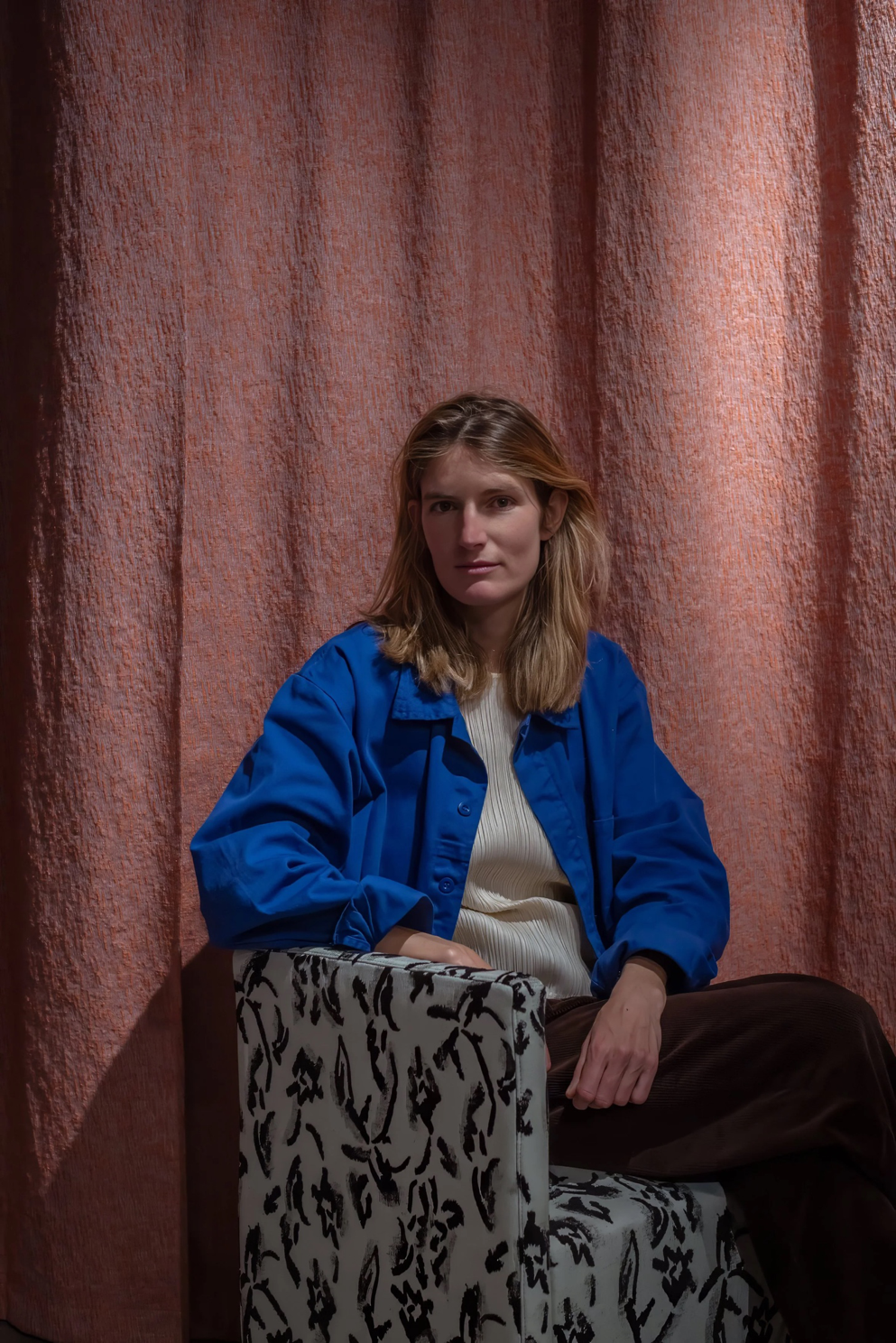
FIORA - Chiara Andreatti x l’Opificio Foto Ilaria Corticelli
l'Opificio is a textile manufacturer based in Turin, and Turin is not simply a biographical detail but an essential part of its identity. The city has a different relationship with production than Milan, less focused on communication and more deeply rooted in a culture of making. The company works within this tradition through precise choices: an entirely Italian and local supply chain, production processes free from formaldehyde and harmful substances, and membership in the Slow Fiber network, which promotes a culture of sustainable textiles throughout the production chain.
At the Salone del Mobile 2026 the company presented three new collections designed by Chiara Andreatti, Incisa, Signum and Fiora, all created using the lampas weaving technique, a historic multi-weft weaving method that allows the design to be built directly into the structure of the fabric rather than printed onto its surface. They were presented in a stand designed by STUDIOTAMAT as a textile laboratory, with a large work table at the centre and the fabric treated for what it truly is: a material for research before becoming a finished product.
It is a distinction that may seem technical but is actually conceptual, because a woven design is not an image applied onto a surface. It is constructed thread by thread within the fabric itself, and this changes the way it responds to light, touch and space.
The three collections were not conceived as a family of variations on the same language, and this is the first thing Chiara wanted to make clear: they are three autonomous aesthetic worlds, three different origins of the mark, designed to offer different levels of neutrality and presence. And this is precisely where I wanted to begin.
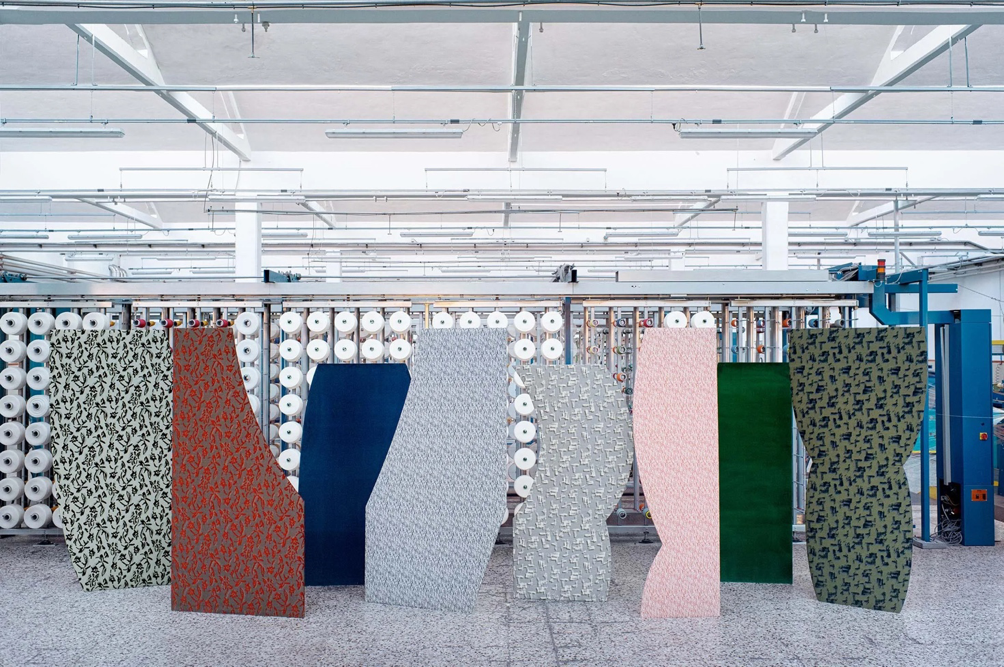
Foto Francesca Ferrari
MAKEYOURHOME You developed many more proposals than the ones l'Opificio ultimately selected. How would you describe the very beginning of this project? Was there something specific you had in mind — an image, a feeling — or was it a more open process, made up of experiments and accumulation?
CHIARA ANDREATTI The initial idea was to create several collections with a strong and recognisable identity, without necessarily developing a family of designs that spoke the same language in different variations. Instead, I wanted to offer a choice between different aesthetic worlds, creating autonomous proposals: bold graphic marks alongside denser or more delicate textures, capable of generating different atmospheres and different levels of neutrality and presence.
For Incisa, I started from a texture that evoked both a marble surface and tree bark. I wanted to recreate a rhythmic grain, defined by an abstract design with an intrinsic strength, similar to the marks found in nature. I was looking for a vibrant flow, a living gesture; introducing a slight inclination further enhanced the dynamism of the composition.
Fiora, on the other hand, originated from a drawing made with coloured oil pastel. The mark was subsequently developed digitally, while preserving all the irregularities and imperfections of the hand-drawn stroke, which are an essential part of its character.
Signum derives from a series of experiments with digital pen strokes. Through overlapping and layering, the mark acquired an almost three-dimensional quality, creating depth and movement.
Naturally, the process was open-ended and required numerous trials before arriving at the final versions. Together with the company, we evaluated both the expressive and technical aspects, eventually identifying these three proposals as the most effective and representative.
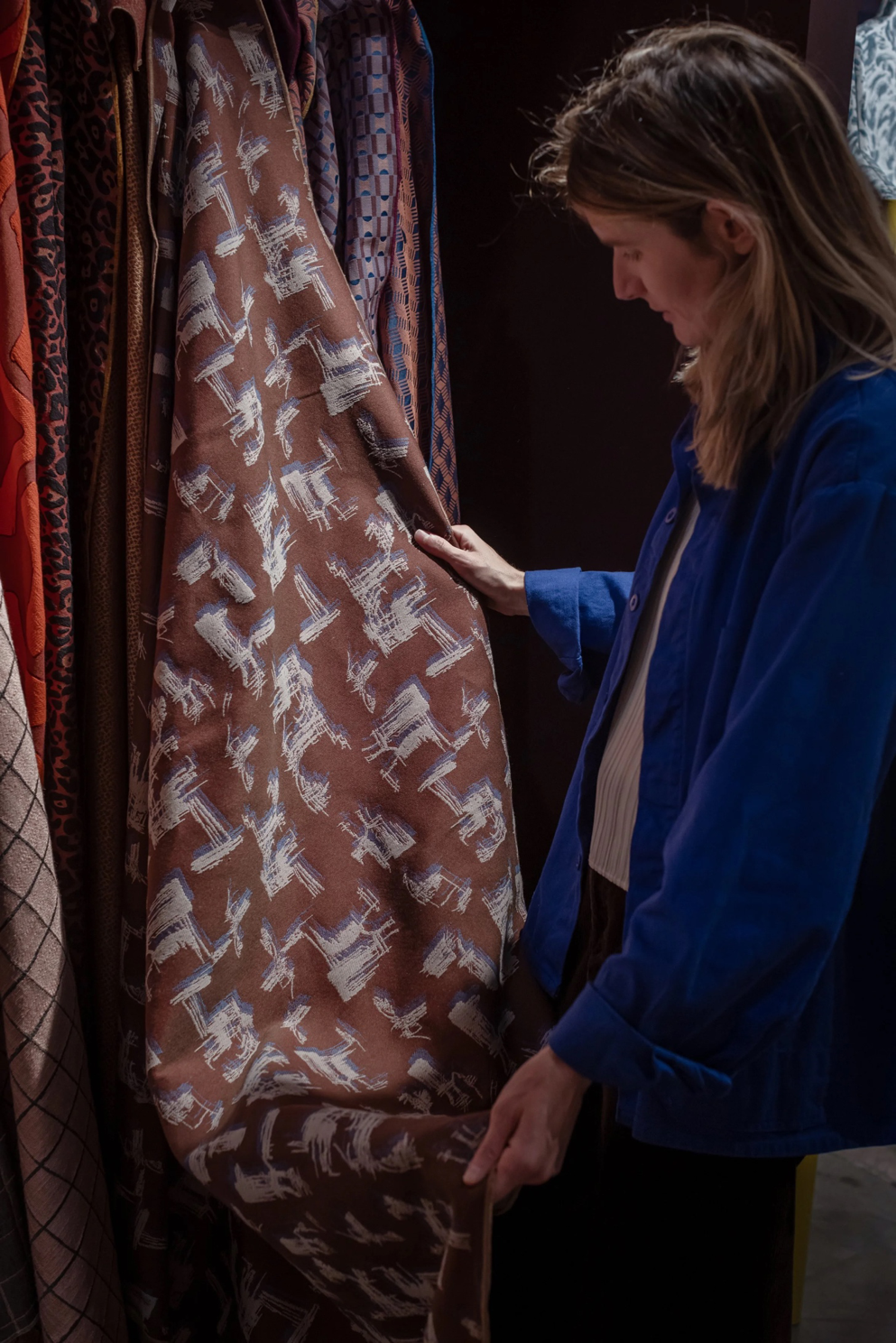
SIGNUM - Chiara Andreatti x l’Opificio Photo Ilaria Corticelli
MAKEYOURHOME In your process, the hand-drawn mark seems to come before everything else. How does it then translate into the structure of the lampas? What changes in that transition, and what remains of the original gesture?
CHIARA ANDREATTI Fiora is the one that comes directly from a drawing made with coloured oil pastel. I subsequently developed the mark digitally, applying coloured backgrounds and introducing softer, more delicate gradients to emphasise certain areas of the design and create greater visual depth, while preserving the tactile and spontaneous quality of the original stroke. The transition from the drawing to the structure of the lampas was the result of a very close dialogue with the company’s technical department, which helped me translate my design intentions into the language of loom weaving. In general, the matrix of the designs remained very faithful to the originals: what changes is the way the mark is interpreted through the textile construction, acquiring body, relief and a different perception of light. In the case of Fiora, we developed a three-dimensional velvet structure that gives the flowers movement and a particularly rich tactile quality. In Signum, on the other hand, the design remained almost unchanged from the digital version; the most evident transformation lies in the way the mark is read through the grid of the loom, where the woven points become almost like micro-pixels, adding a new material dimension without altering its identity. For Incisa, the contribution of the technical department was particularly interesting: they identified a textile solution that I greatly appreciated because it further emphasised the character of the design, making it more three-dimensional and profound. The original texture, inspired by natural veins, thus acquired an even stronger presence, thanks to the way light interacts with the surface of the fabric and highlights its variations. What remains constant across all three collections is the character of the initial gesture: its rhythm, imperfections and energy. Weaving does not replace the mark, but interprets it through another language, enriching it with depth, structure and physical presence.
“I wanted to offer a choice between different aesthetic worlds, creating autonomous proposals capable of generating different atmospheres and different levels of neutrality and presence.”
Chiara Andreatti
MAKEYOURHOME l'Opificio is a company with a manufacturing history deeply rooted in Turin, a city with a very different relationship with materials and production from Milan. Did you sense this difference while working? Did Turin, or the identity of the company, influence your choices in any way?
CHIARA ANDREATTI Yes, I believe that difference can be felt. In the collective imagination, Turin is a city deeply connected to manufacturing, production and a certain idea of Italian craftsmanship and excellence. When I began working on the project, I immediately thought of the world of the ancient silk mills, the production of silk and brocades, and that textile tradition which has shaped the history of the area and reflects a deeply rooted culture of making. These are images that evoke a strong sense of Italian identity, connected to place, history and the value of craftsmanship. Visiting the l'Opificio showroom also reinforced this impression. It is located in the heart of a historic district of the city, surrounded by old buildings that still preserve a strong memory of the past. It is an environment with a particular atmosphere, shaped by history, material and tradition, and I believe all of this inevitably influenced my approach to the project. One of the aspects that certainly encouraged me to accept this collaboration was the company’s history and its extraordinary manufacturing know-how. Working with a company that possesses such an in-depth knowledge of weaving means engaging with an authentic material culture, capable of transforming a design idea into a product of exceptional quality. Knowing that I could rely on this expertise gave me the freedom to explore different marks and solutions, confident that they would be interpreted and brought to their full potential through the language of textiles.
MAKEYOURHOME When you imagine these textiles in a space, what exactly do you see? A light, a room, a particular moment of the day?
CHIARA ANDREATTI I imagine them above all in timeless interiors: large curtains filtering the light, or textile coverings for armchairs, sofas and small ottomans within rooms, perhaps in a historic building. With very precise natural light, the kind of sunlight that enters through large windows and moves across the space, creating continuous chiaroscuro effects. I like to imagine a moment of the day when the light is soft and grazing, able to reveal the material quality of the fabric, its three-dimensionality and the variations in the design. Perhaps this is what I see most clearly: a space in which the textile is not simply a decorative element, but contributes to creating the atmosphere of the room, in dialogue with the history of the place and the passing of the hours.
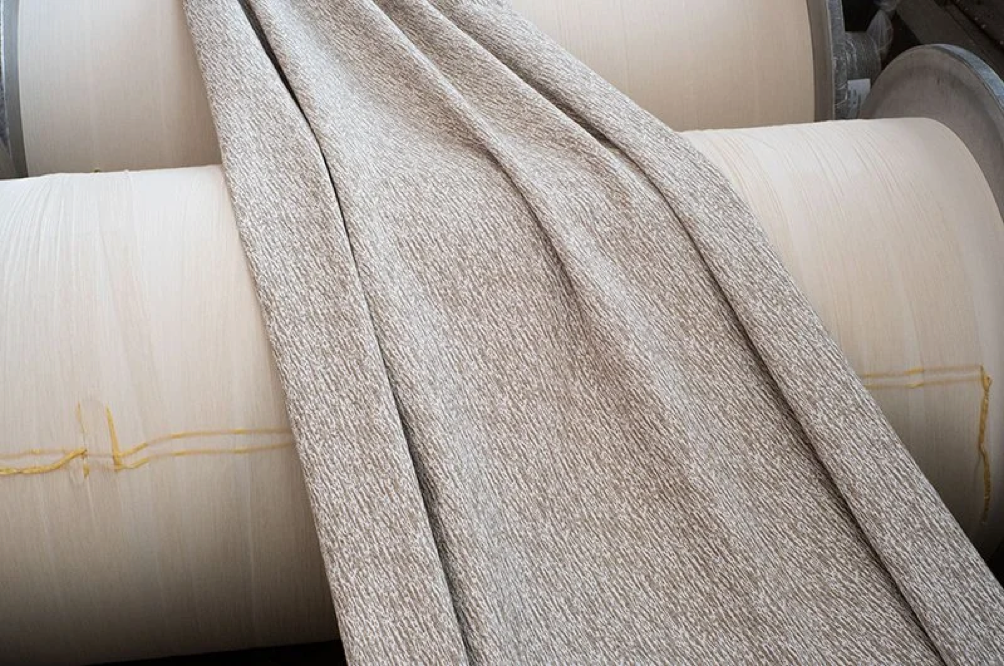
INCISA - Chiara Andreatti x l’Opificio Photo Francesca Ferrari
The final question is the one I cared about most, because it moves the textile from the worktable into the lived-in space, which is ultimately where the work of a textile designer meets mine. Chiara’s answers confirm what we set out to explore: textiles are reclaiming a design role that for years had been denied to them, relegated to the final chapter of a project, the realm of finishes. They describe a process in which drawing and weaving transform one another, in which the free gesture needs the loom to acquire body, while the loom needs the gesture to avoid repetition. And they reveal something that goes beyond this particular project: that a company’s technical expertise is not a constraint for a designer, but the condition of their freedom. Chiara was able to explore different marks and solutions precisely because she knew there was a know-how behind them capable of interpreting them. It is a reversal that our industry should keep in mind whenever it sets creativity and manufacturing against each other, as if they were two worlds in tension. Incisa, Signum and Fiora are three autonomous aesthetic worlds, yet together they express the same idea: a well-designed textile does not simply furnish a space, it helps construct it.
A company’s technical expertise is not a constraint for a designer, but the condition of their freedom. The free gesture needs the loom to acquire body, while the loom needs the gesture to avoid repetition.
It is precisely in the article’s final sentence — “a well-designed textile does not simply furnish a space, it helps construct it” — that we recognise one of the principles at the heart of the path l’Opificio is developing.
For us, textile culture of space begins with the awareness that textiles possess their own design potential.
They can transform the light in a room. They can absorb it or reflect it. They can change the perception of volume, introduce rhythm, soften the rigidity of architecture, create intimacy, accompany the body and transform the sensory quality of an environment.
But for this to happen, both a culture of design and a culture of making are essential.
The conversation with Chiara Andreatti makes this meeting particularly clear. On one side, the gesture: the coloured oil pastel of FIORA, the digital pen of SIGNUM, the natural references behind INCISA. On the other, the textile knowledge required to transform those marks into material, through the loom, the yarns and the construction of the lampas.
Creativity and manufacturing are therefore not two separate stages. It is through their relationship that the project takes shape.
And perhaps this is one of the most important things to preserve and pass on: knowledge of the material does not limit creative freedom, but gives it new tools with which to express itself.
It is the same idea that guides our work: to develop a textile culture of space capable of creating beauty, identity and longevity.
Because a textile can certainly dress an interior.
But when it is born from a conscious design process, it can help define its identity.
Original article published by MakeYourHomeStudio.com, July 2026.
Text reproduced in full.


 English